How to Get Rid of Bed Bugs: Why the Usual Spray-and-Wash Routine Often Falls Short
The most effective plan starts with what you can see—but it cannot stop there. Here is how to inspect the room, remove visible activity, and address the hidden routes that keep the cycle going.

If you are searching for how to get rid of bed bugs, you probably want one clear answer: find the bugs, treat the bed, wash everything, and get your room back. That is the right instinct—but it often misses the reason the problem can seem to disappear and then return.
The quick answer
A practical bed bug plan is layered:
- Confirm the signs and inspect seams, joints, and nearby furniture.
- Contain bedding and clothing before moving them through the home.
- Vacuum, launder, monitor, and follow every pesticide label exactly.
- Reduce clutter and seal the cracks that connect hiding areas.
- Use continuous room-by-room support instead of relying on one spot treatment.
Think in layers, not one miracle step
The goal is to remove visible activity, limit movement, monitor what remains, and keep the whole room covered consistently.
“The mattress may be where you notice the problem. It is not always the only place the problem is using.”
First, confirm what you are looking at
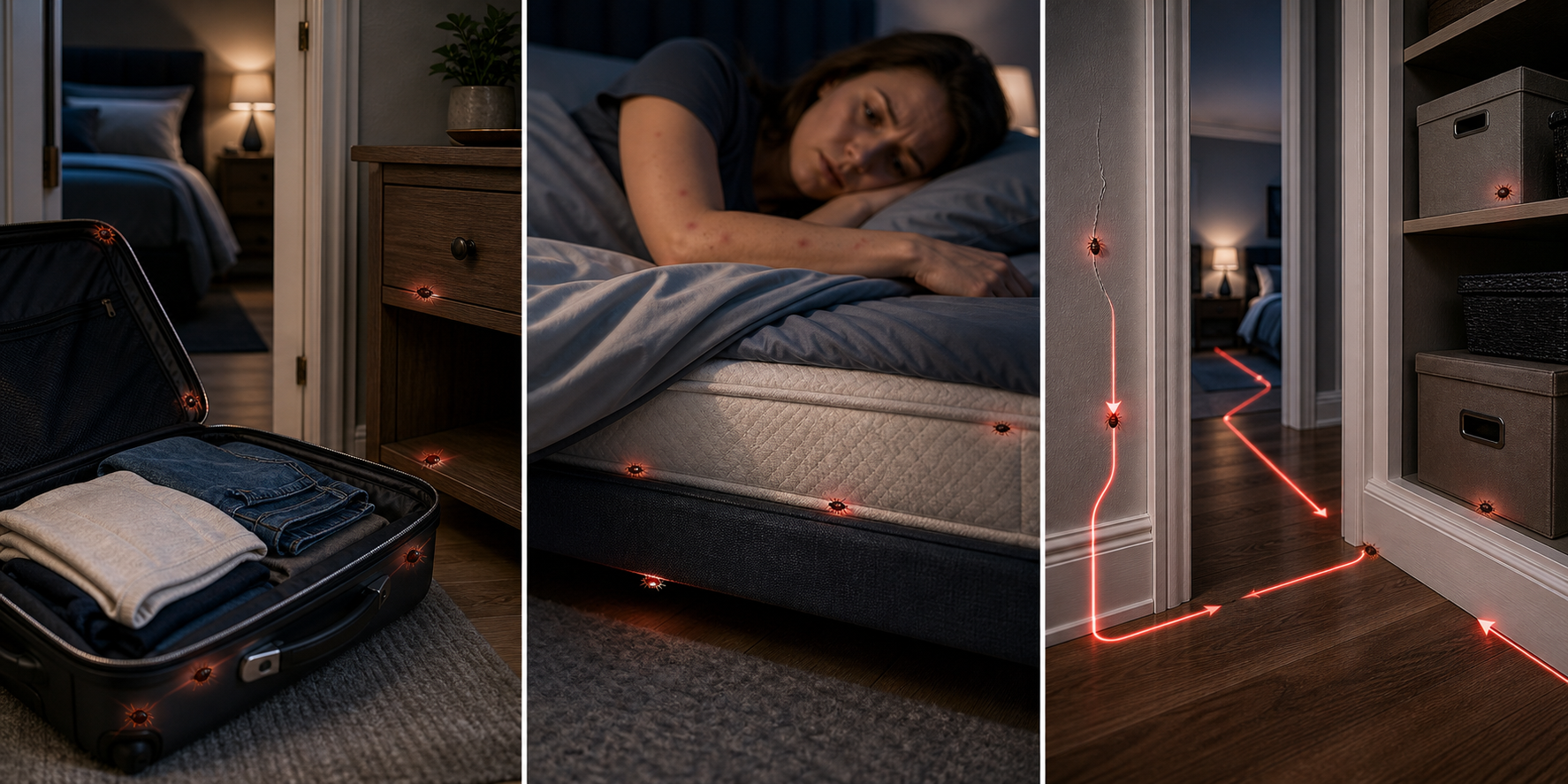
Bed bugs are small, flat, reddish-brown insects. Along with live bugs, look for pale eggs, translucent shed skins, and dark spotting around mattress piping, labels, tufts, the back of the headboard, screw holes, and the joints of the bed frame.

Bites alone cannot confirm the source. If you are unsure, capture a specimen in a sealed bag or on clear tape and ask a qualified local pest professional to identify it.
Why the usual spray-and-wash routine can fall short
Most people treat the places they can reach first. They strip the bed, run hot laundry, vacuum the floor, and spray the visible seam. Those steps can be useful, but the routine becomes a loop when bugs or eggs remain inside joints, behind the headboard, along baseboards, near outlets, or inside items that return to the room.

Another common mistake is carrying untreated pillows, baskets, bags, or clothing through several rooms. Containment matters because the path to the laundry can become part of the problem.
Already cleaning the room but want continuous coverage?
See how PestGuard is designed to stay plugged into an open outlet as one room-by-room support layer.
See PestGuard Room OptionsStep 1 — Inspect the places bed bugs actually use
Move slowly and use a bright flashlight. Begin at the bed, then work outward: mattress piping, box spring fabric, frame joints, headboard mounting points, the back and underside of nightstands, baseboard gaps, curtain folds, closet luggage, and upholstered furniture near the bed.
Do not immediately carry every item into another room. Photograph what you find and note the location. A simple map helps you repeat the inspection instead of starting from zero every night.
Step 2 — Remove what you can see without spreading it
- Place bedding and washable items directly into sealed bags before moving them.
- Wash and dry items using fabric-safe settings appropriate for the material.
- Use a vacuum crevice tool on seams and joints; seal and discard the contents promptly.
- Reduce clutter, especially cardboard and loose textiles beside the bed.
- If using a pesticide, use only a product labeled for the intended area and follow the label. Never mix products.
Step 3 — Stop treating the mattress as the whole room
Bed bugs can use narrow, protected routes near the bed. In apartments, dorms, hotels, and multi-room homes, baseboards, outlets, shared walls, luggage, and furniture gaps can connect the places you inspect with the places you overlook.

This is why a room plan should be consistent. Keep the bed area inspectable, seal obvious gaps where appropriate, monitor the same locations, and avoid moving potentially affected items into clean rooms.
Where PestGuard fits into a layered room plan
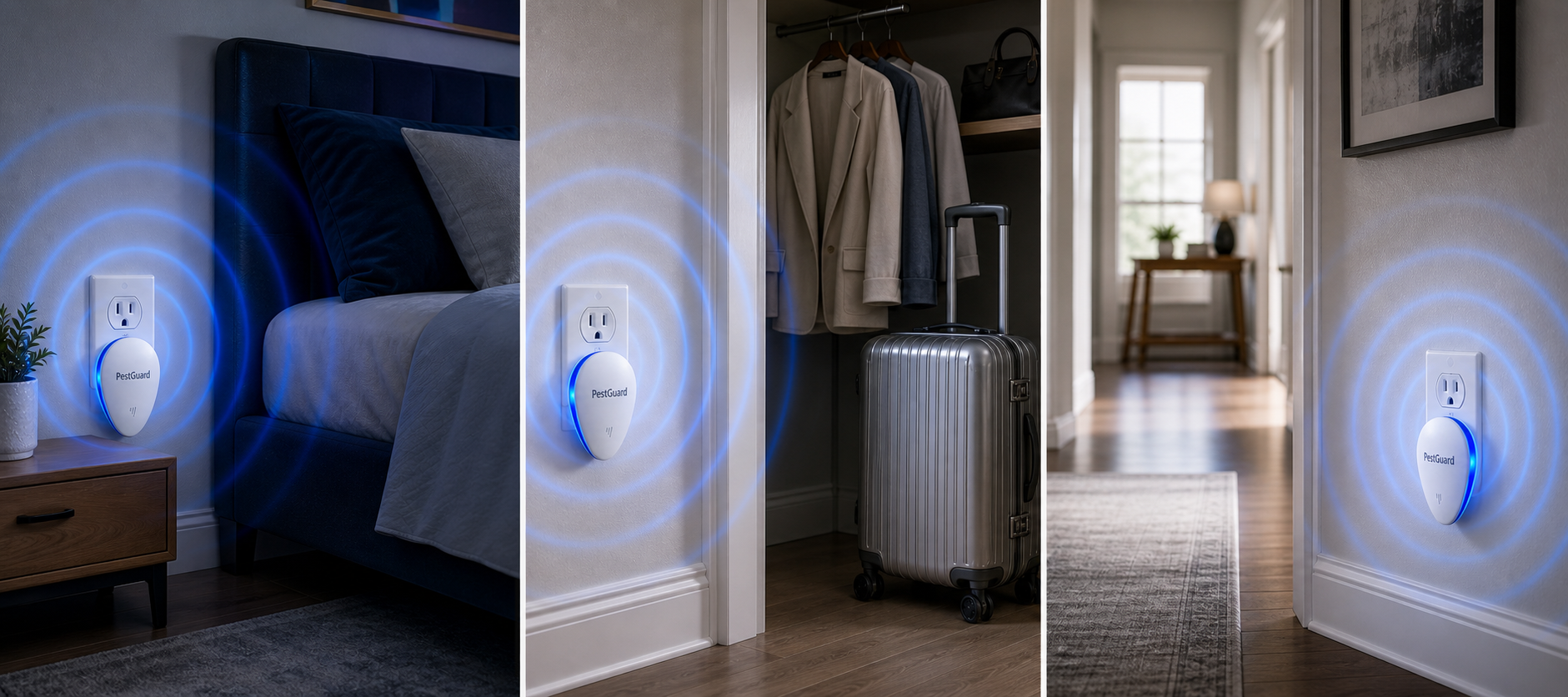
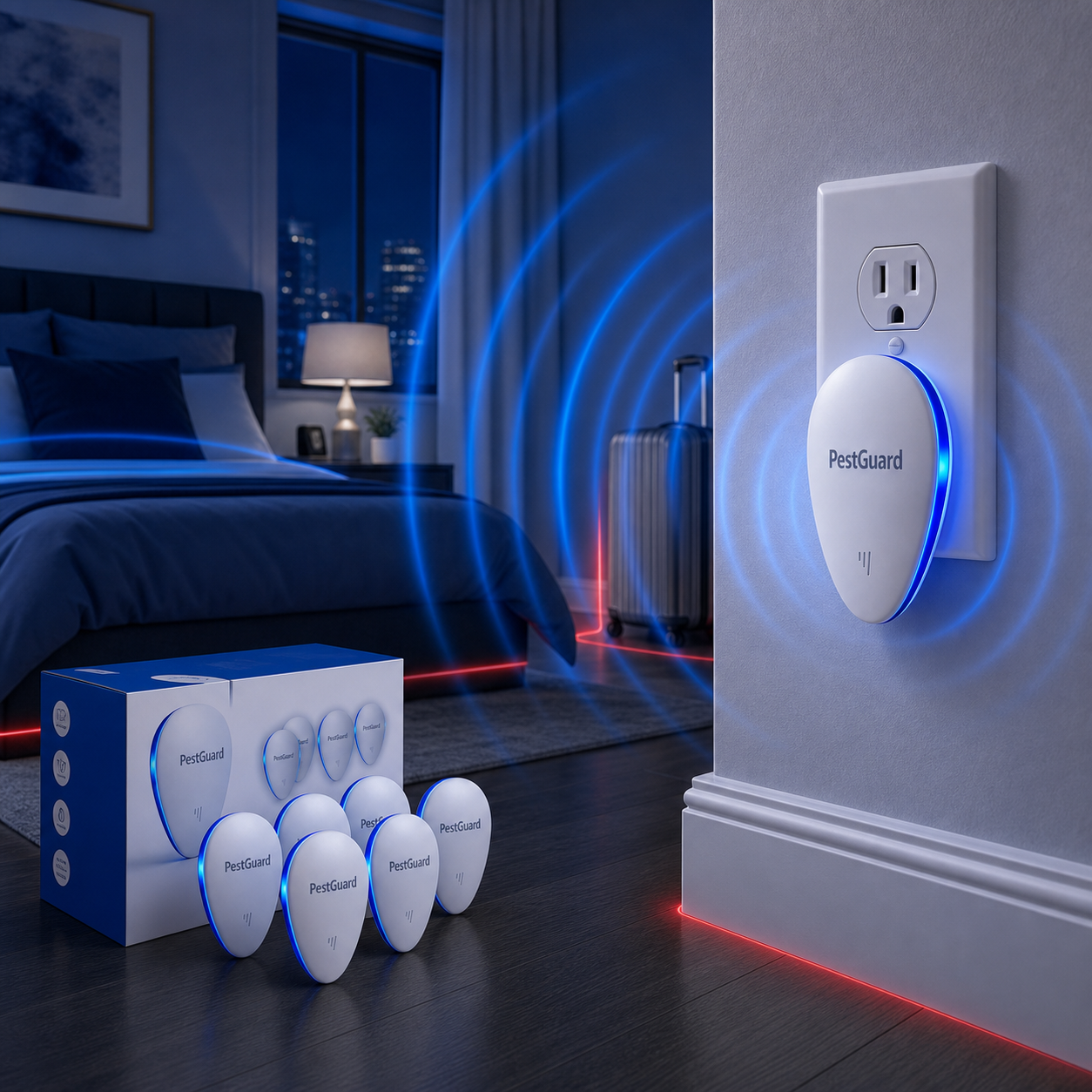
PestGuard is a plug-in pest repeller designed to remain active in an open wall outlet. It is not a replacement for laundering, vacuuming, sealing, monitoring, or professional treatment when an infestation is severe. Its role is continuous room-by-room support after the frantic spray bottle and laundry basket are put away.

Build coverage around the rooms you actually use
The current PestGuard bundles are designed for bedrooms, living spaces, garages, and other separated zones.
Check Current PestGuard Bundles
What makes the layered plan different?
| Approach | What it does well | What it can miss |
|---|---|---|
| Spray only | Targets labeled surfaces or visible areas | Untreated gaps, eggs, moved items, and routes outside the sprayed spot |
| Laundry only | Processes washable bedding and clothing | Bed frames, walls, furniture, luggage, and items returned to the room |
| Layered room plan | Combines inspection, containment, cleaning, monitoring, gap reduction, and continuous support | Requires consistency; severe infestations may still need professional help |
Why families choose a room-by-room PestGuard setup
“I use one in the bedroom and one near the living area. The setup is simple and I like not having another daily routine to remember.”
Lena S. · Brooklyn apartment“The six-pack made more sense for our layout because the kids’ rooms and downstairs are separated.”
Marcus H. · Dad of 2“We needed something easy to leave in place between guest stays. Room-by-room coverage was the main reason I tried it.”
Nicole R. · Rental hostImportant expectations: PestGuard is a continuous plug-in support device, not an instant extermination promise. Results vary by home layout, placement, pest pressure, and the rest of the control plan. Heavy or widespread activity may require encasements, traps, laundering, vacuuming, sealing, or a licensed pest-control professional.
Frequently asked questions
Can I get rid of bed bugs with spray alone?
A correctly labeled product may help in the areas named on its label, but one spot treatment can miss eggs, gaps, furniture joints, and items moved through the home. Follow the label exactly and combine treatment with inspection, containment, cleaning, and monitoring.
Does one PestGuard device cover the whole house?
Closed doors, long hallways, multiple floors, and dense walls divide a home into separate zones. PestGuard recommends room-by-room placement with the device unobstructed in an open outlet.
How quickly should I expect a change?
There is no universal timeline. Keep the device running continuously and maintain the other parts of the room plan. Pest pressure, room layout, and placement all affect individual experience.
When should I call a professional?
Call a licensed local professional if activity is widespread, continues after a careful plan, involves multiple apartments or rooms, or if you cannot safely identify and treat the affected areas.
Make continuous room coverage the step you do not have to repeat every night
Choose the PestGuard bundle that matches your bedroom and the other separated spaces you want to cover. Current orders include the store’s 90-day satisfaction guarantee.
See Today’s PestGuard Options