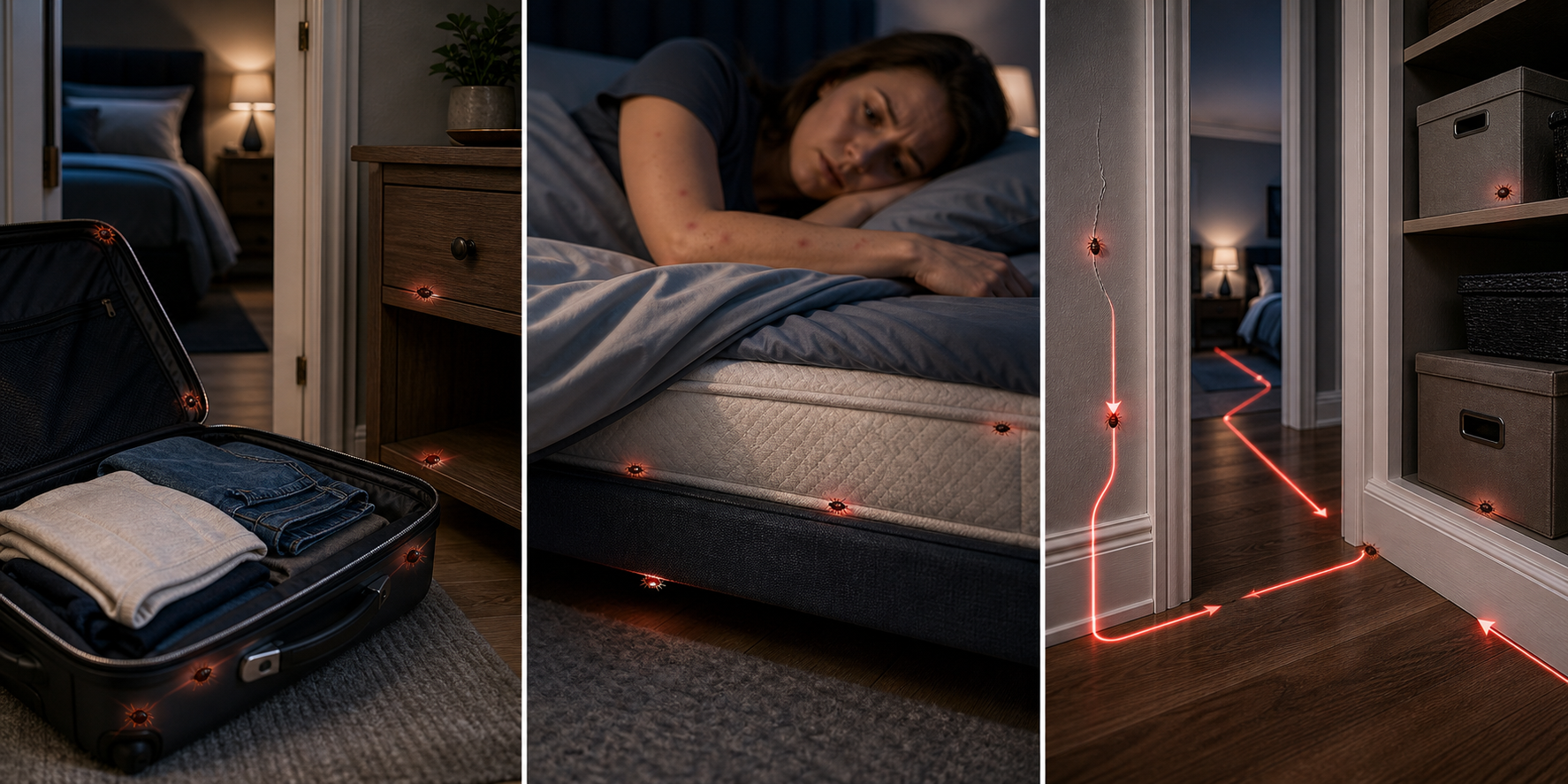
Waking up with itchy red welts is every homeowner's nightmare. Bed bugs are notoriously difficult to eliminate, and many people are understandably wary of spraying harsh chemicals where they sleep. The good news? You can get rid of bed bugs naturally — without exposing your family or pets to toxic pesticides.
In this guide, we'll walk through six proven chemical-free methods, explain why they work, and help you build a strategy that actually eliminates an infestation rather than just pushing it around.
1. Heat Treatment: The Most Effective Natural Method
Bed bugs die when exposed to temperatures above 120°F (49°C) for sustained periods. This makes heat one of the most reliable elimination methods available.
How to apply heat treatment at home:
- Wash all bedding, clothing, and fabric items in hot water (at least 130°F) and dry on the highest heat setting for 30+ minutes
- Use a portable bed bug heater or heat chamber for items that can't be washed — shoes, books, luggage
- Steam clean mattress seams, box springs, and upholstered furniture using a garment steamer set above 200°F
According to the EPA's bed bug guidance, heat treatment is one of the most effective non-chemical approaches when applied correctly.
2. Ultrasonic Pest Repellers: A Hands-Free Deterrent
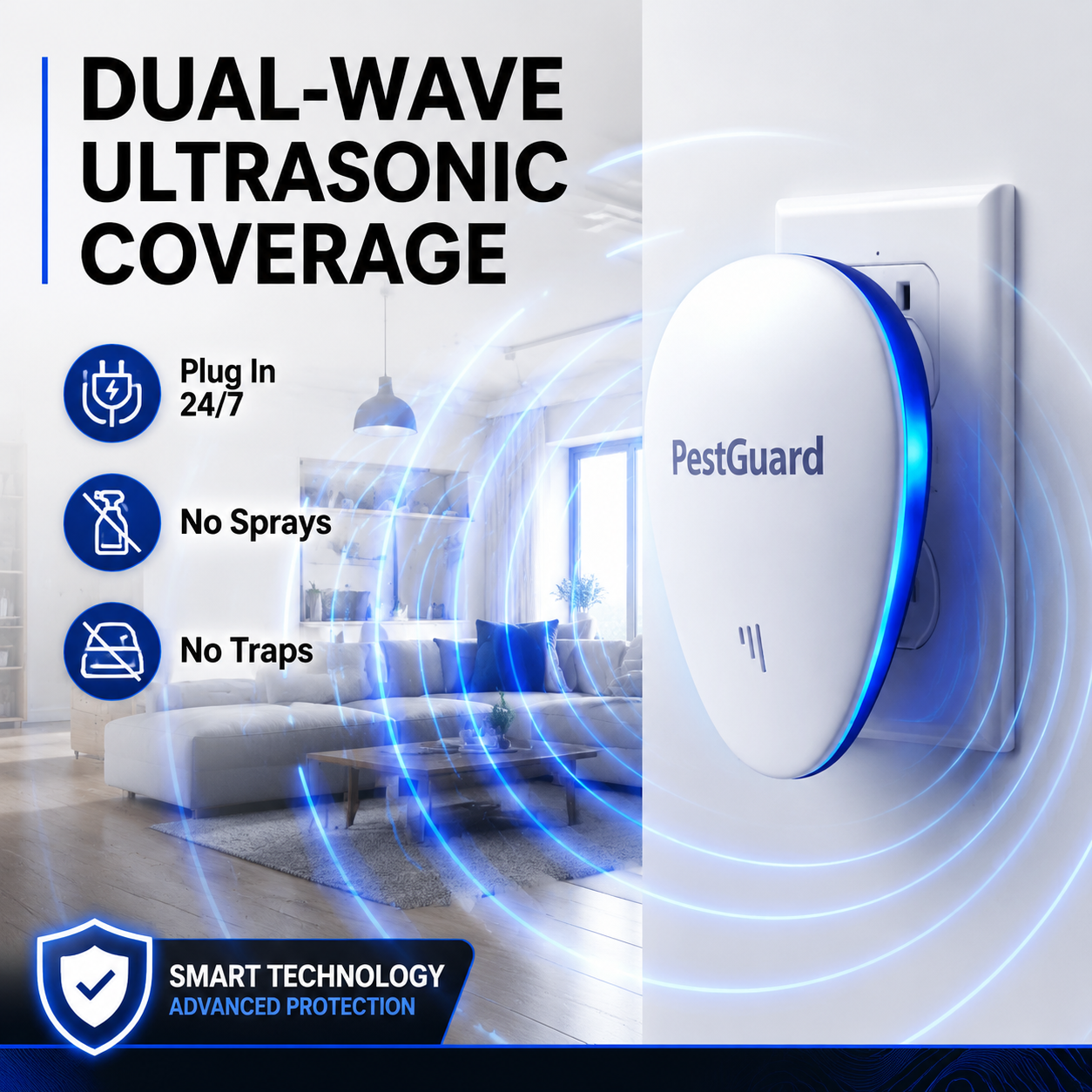
Ultrasonic devices emit high-frequency sound waves that are inaudible to humans but create an uncomfortable environment for pests. While no single method eliminates bed bugs alone, ultrasonic repellers serve as an excellent ongoing deterrent as part of an integrated pest management (IPM) strategy.
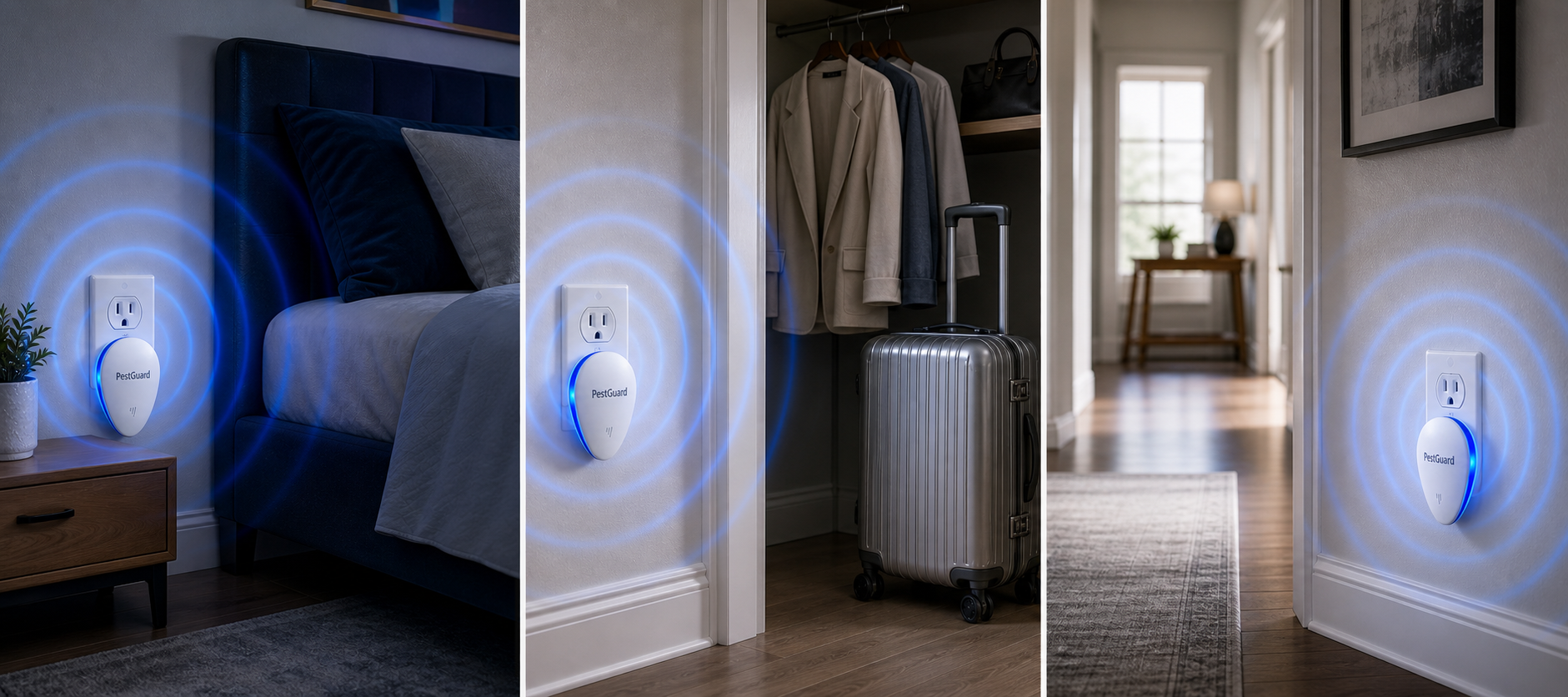
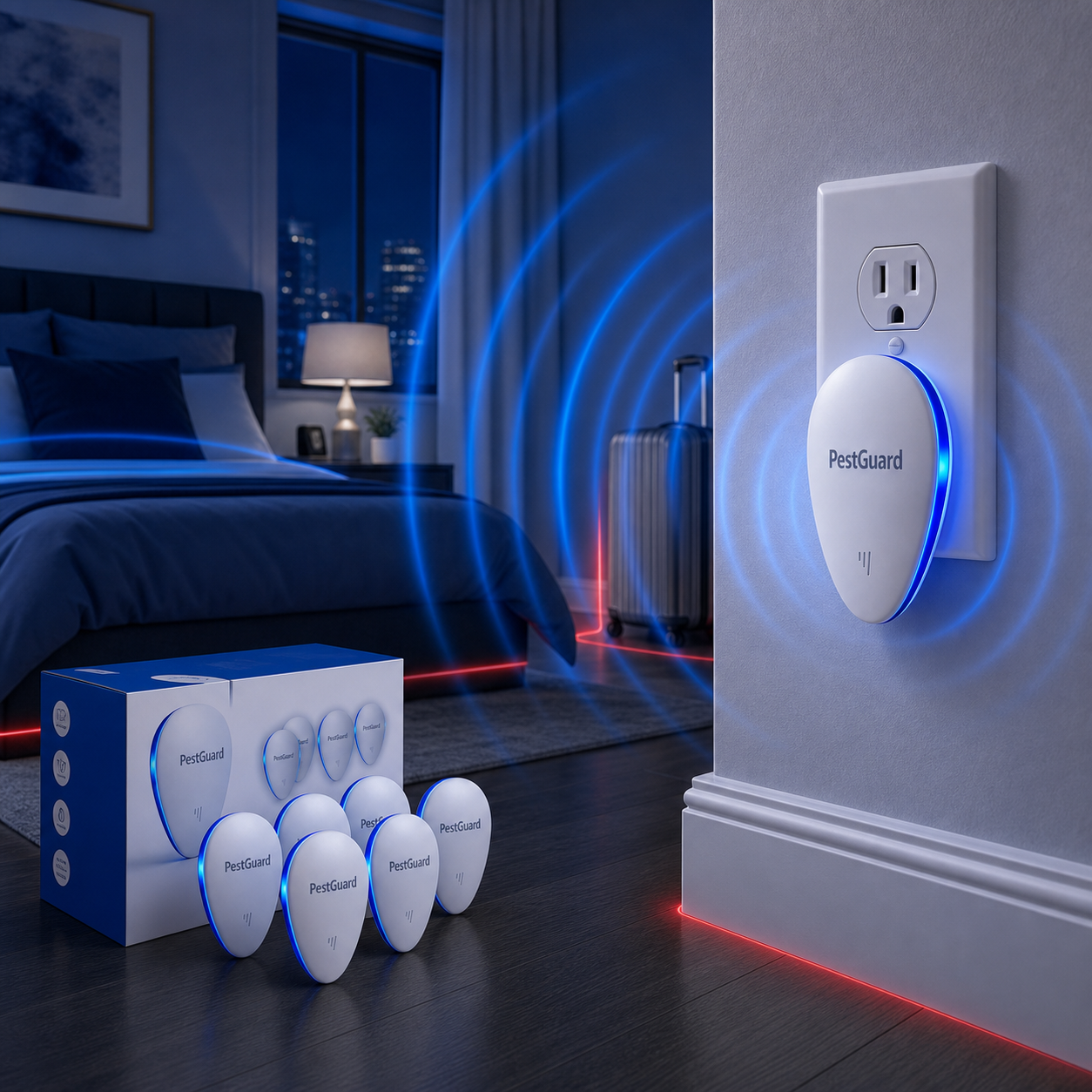
Modern ultrasonic repellers like the PestGuard™ Ultrasonic Bed Bug Killer use variable-frequency technology that prevents pests from adapting to a single tone. Simply plug it in near sleeping areas and let it work 24/7.
Best for: Prevention after initial treatment, ongoing protection in bedrooms and living spaces.
3. Diatomaceous Earth (DE): Nature's Insect Killer
Food-grade diatomaceous earth is a fine powder made from fossilized algae. It works by damaging the waxy outer coating of bed bugs, causing them to dehydrate and die within 48-72 hours.
How to use DE effectively:
- Apply a thin, even layer along baseboards, bed frame joints, and behind outlet covers
- Dust inside mattress encasements before sealing
- Reapply after vacuuming — DE loses effectiveness when wet
Important: Always use food-grade DE, not pool-grade. Wear a dust mask during application to avoid inhaling the fine particles.
4. Mattress Encasements: Trap and Starve
Bed bug-proof mattress and box spring encasements don't kill bugs directly — they trap existing bugs inside where they eventually starve (bed bugs can survive up to 12 months without feeding, so patience is key).
More importantly, encasements eliminate the countless hiding spots in mattress seams and tufts, making it much easier to spot and address any remaining bugs.
Pro tip: Combine encasements with an ultrasonic pest repeller placed near the bed for a two-layer defense system.
5. Vacuuming: Reduce the Population Fast
Regular, thorough vacuuming won't eliminate an infestation on its own, but it significantly reduces the bug population and removes eggs from surfaces.
Vacuum these areas daily during an active infestation:
- Mattress seams, piping, and tufts
- Box spring folds and stapled fabric
- Bed frame joints and headboard crevices
- Baseboards and carpet edges within 5 feet of the bed
- Nightstand drawers and undersides
Critical step: Immediately seal the vacuum bag in a plastic bag and dispose of it outside. If using a bagless vacuum, empty the canister into a sealed bag and clean the filter.
6. Essential Oil Sprays: A Supplementary Repellent
Certain essential oils — particularly tea tree, lavender, and peppermint — have shown repellent properties against bed bugs in laboratory studies. While they won't eliminate an infestation, they can discourage bugs from settling in treated areas.
DIY bed bug spray recipe:
- 16 oz water
- 10 drops tea tree oil
- 10 drops lavender oil
- 5 drops peppermint oil
Spray along bed frames, baseboards, and luggage after travel. Reapply every 2-3 days.
Building Your Chemical-Free Battle Plan
The most effective approach combines multiple methods. Here's a practical action plan:
- Week 1: Deep clean — wash all fabrics on high heat, vacuum thoroughly, install mattress encasements
- Week 1-2: Apply diatomaceous earth to cracks, crevices, and along baseboards
- Ongoing: Plug in an ultrasonic pest repeller for continuous deterrence
- Ongoing: Vacuum every 2-3 days for at least 2 weeks
- Monthly: Inspect mattress seams and bed frame joints for signs of activity
This integrated approach attacks bed bugs at every life stage — killing adults with heat and DE, trapping them with encasements, reducing populations with vacuuming, and deterring re-infestation with ultrasonic technology.
When to Call a Professional
If you've followed these steps for 3-4 weeks and still see active signs (live bugs, fresh blood spots, new bites), it may be time to consult a licensed pest control professional. Many now offer heat treatment services that align with a chemical-free approach.
For most early-to-moderate infestations, however, the methods above — especially when combined — are highly effective at eliminating bed bugs without a single drop of pesticide.
Ready to add ultrasonic protection to your home? The PestGuard™ Ultrasonic Bed Bug Killer provides 24/7 chemical-free pest deterrence. Plug it in, and let sound waves do the work. Shop now →