When pests invade your home, you have two broad categories of defense: chemical sprays and ultrasonic repellers. This guide breaks down the honest pros and cons so you can choose the right method.
How Each Method Works
Chemical sprays contain neurotoxins (pyrethroids, neonicotinoids) that kill pests on contact. They are fast-acting but require repeated application.
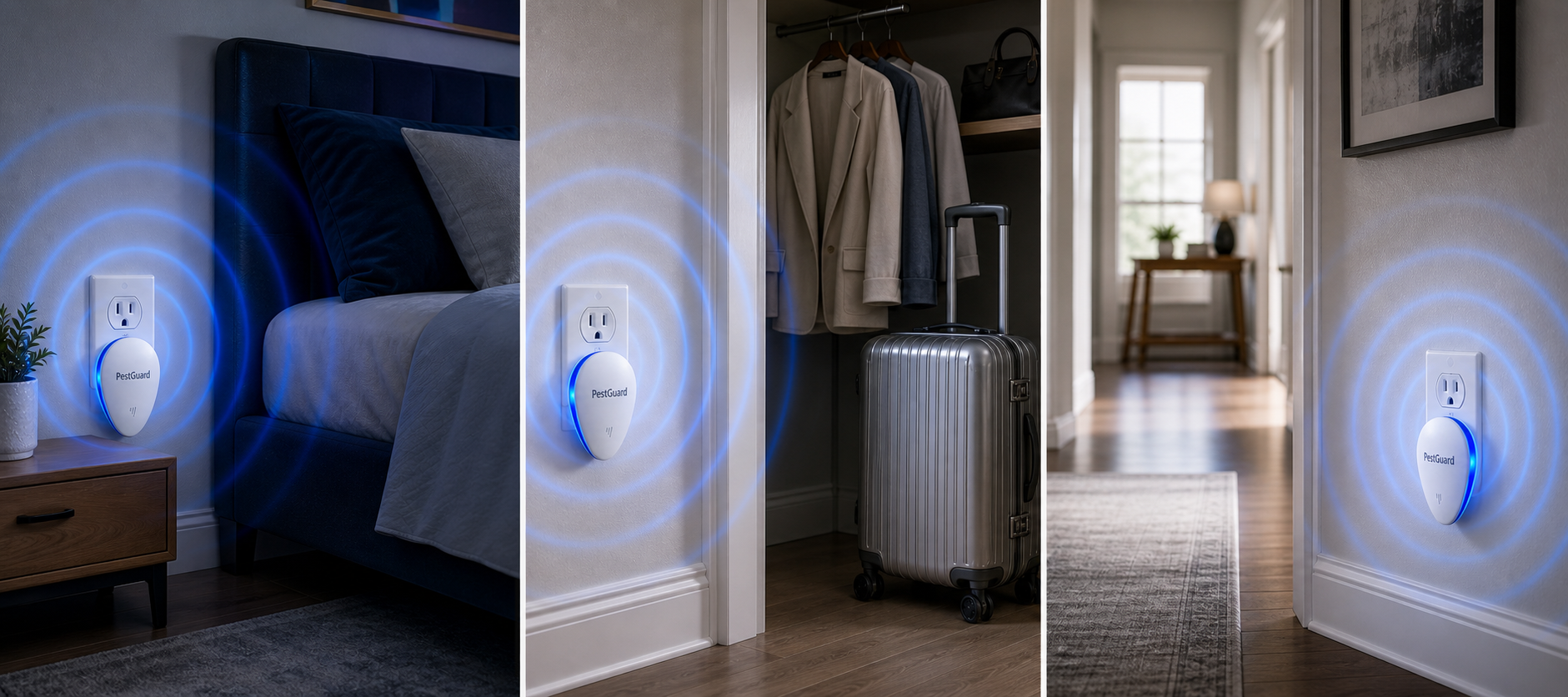
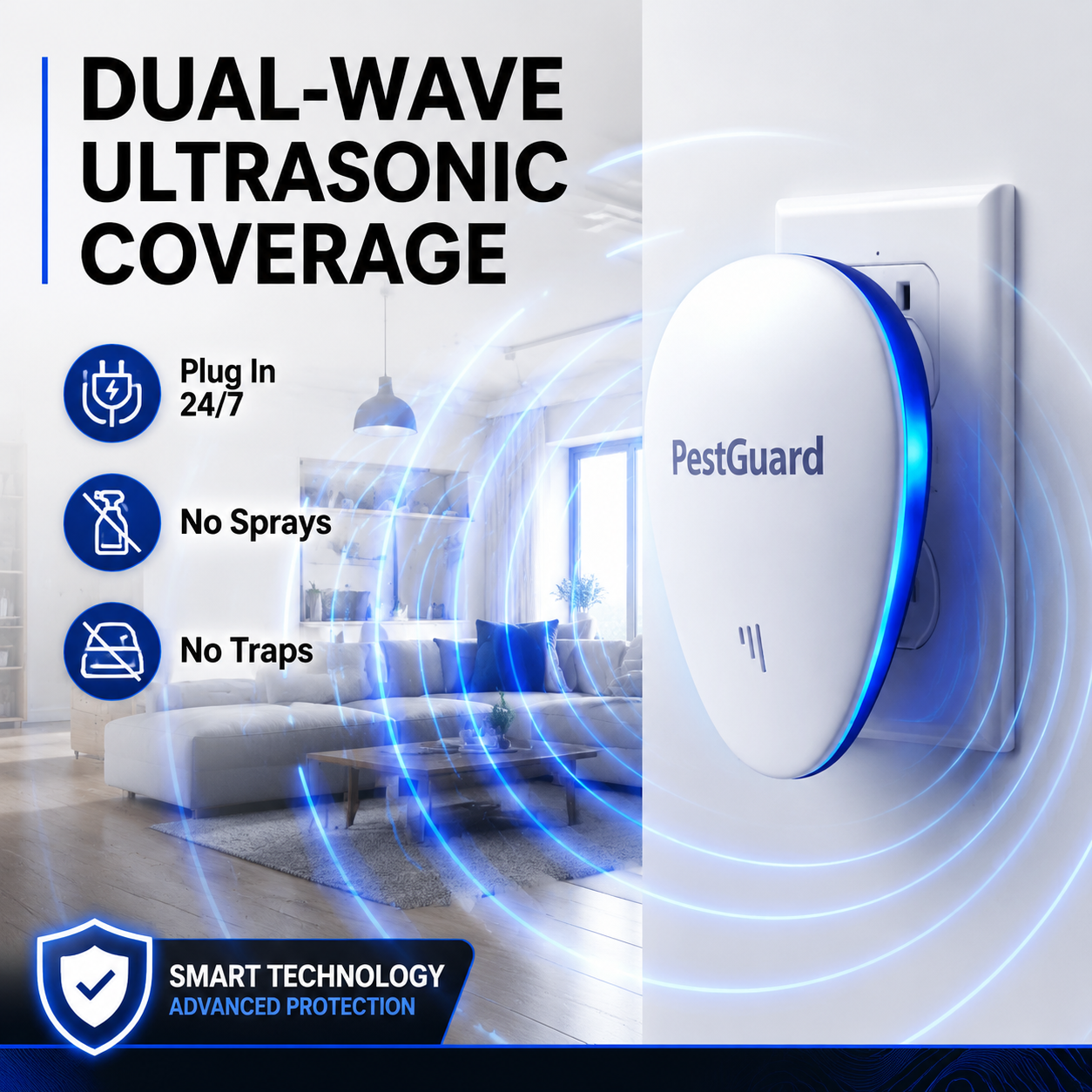
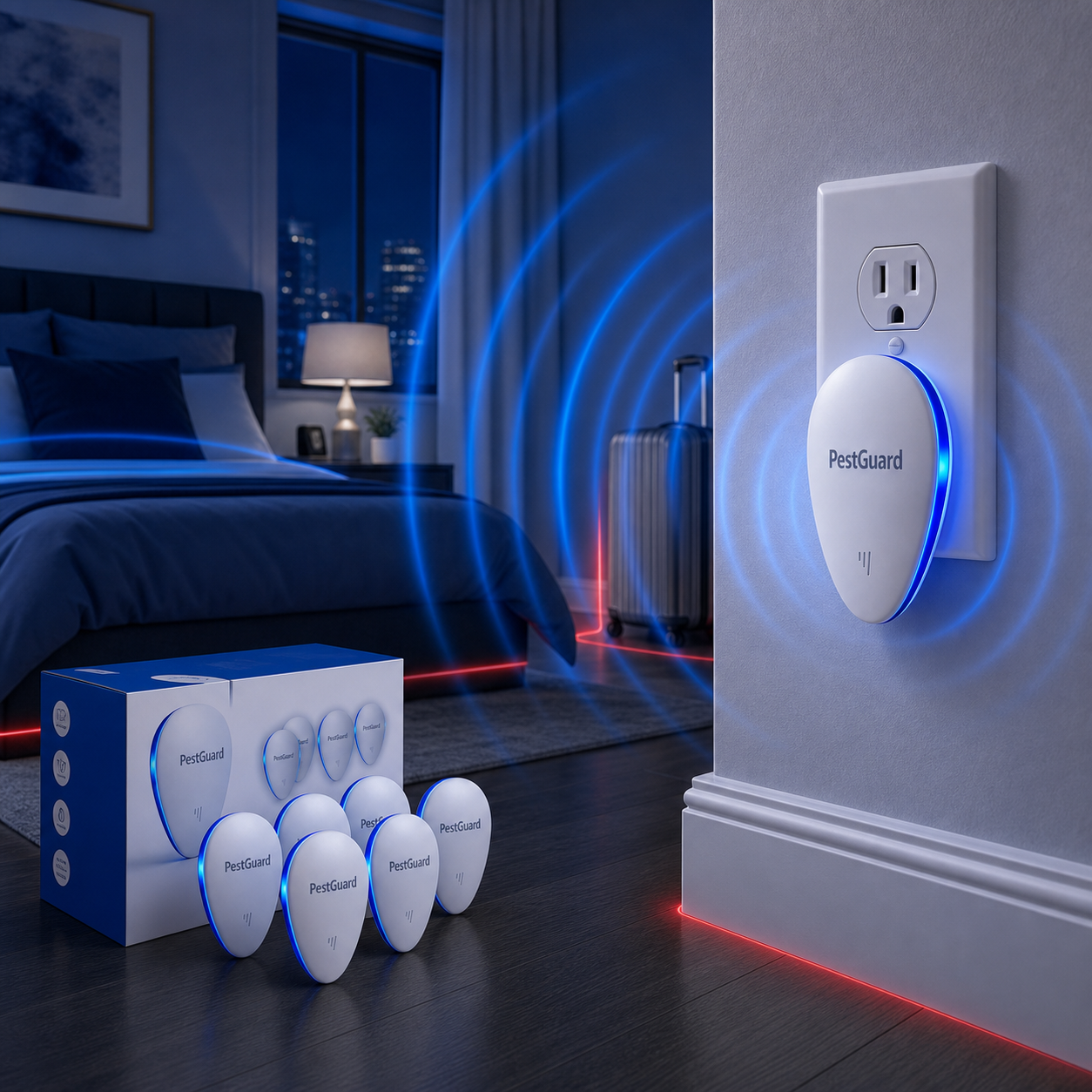
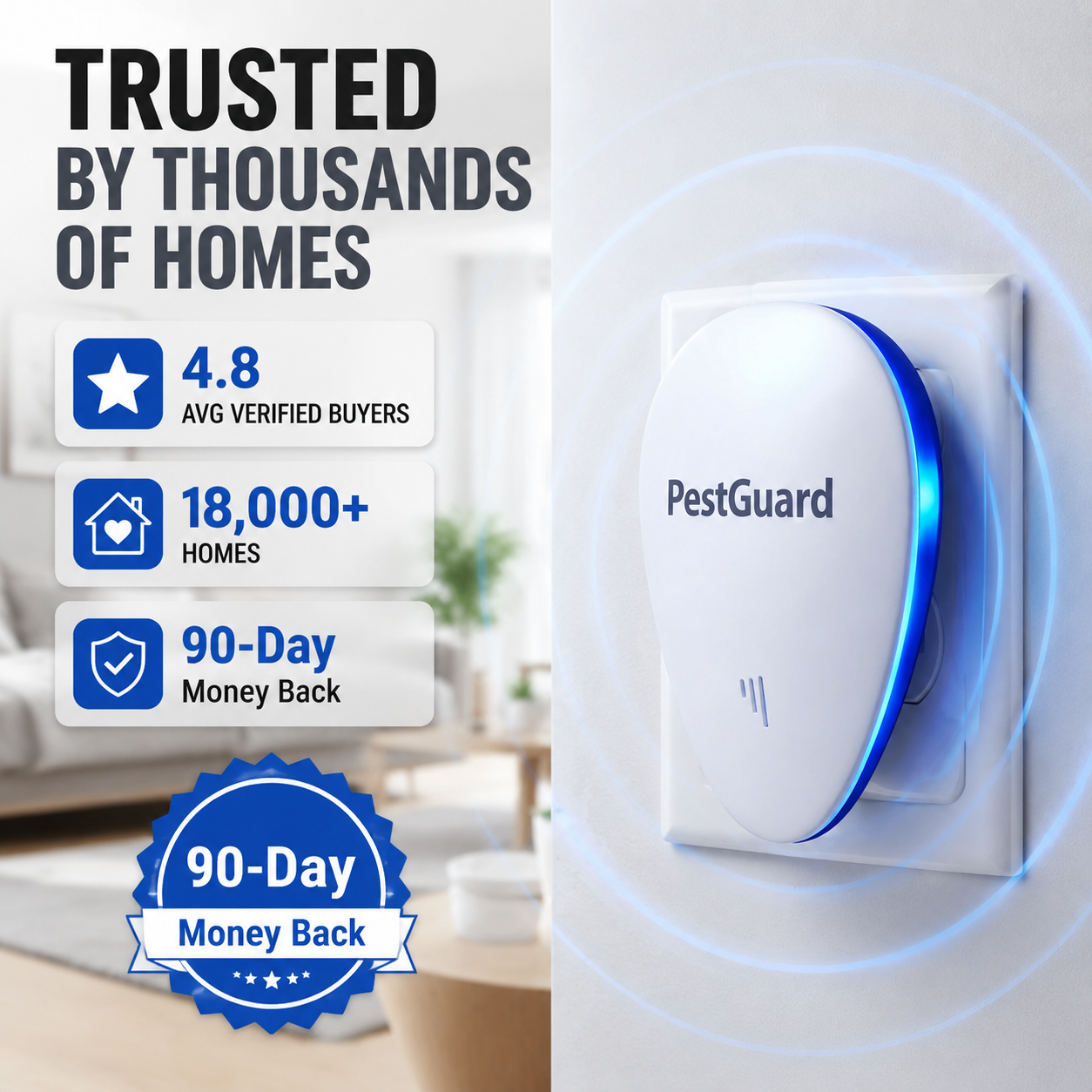
Ultrasonic repellers emit high-frequency sound waves (25-65 kHz) that deter pests from settling in treated areas. Modern devices like the PestGuard™ Ultrasonic Repeller use variable frequencies to prevent adaptation.
Head-to-Head Comparison
| Factor | Chemical Spray | Ultrasonic Repeller |
|---|---|---|
| Speed | Kills on contact | Deters over days/weeks |
| Safety | Toxic to pets/children | Non-toxic, pet-safe |
| Cost/year | $120-360 (repeated buys) | $30-60 one-time |
| Coverage | Only where sprayed | Entire room (800-1200 sq ft) |
| Mess | Residue, staining risk | None — plug and forget |
| Resistance | Pests develop resistance | Variable-freq prevents adaptation |
| Environment | Contaminates water | Zero chemical runoff |
When to Use Chemical Sprays
- Severe active infestations needing immediate knockdown
- Targeted professional treatment of specific nests
- Short-term emergency use
When to Use Ultrasonic Repellers
- Prevention — stop pests before they establish
- Homes with children and pets
- Long-term, low-maintenance 24/7 protection
- Part of an integrated pest management (IPM) strategy
The Best Approach: Use Both Strategically
- Eliminate active infestations with targeted treatment
- Prevent re-infestation with an ultrasonic repeller running 24/7
- Maintain with good hygiene — seal entry points, reduce clutter, inspect regularly
Ready to switch to chemical-free pest control? The PestGuard™ Ultrasonic Pest Repeller provides 24/7 protection with zero chemicals. Shop now →