Rodent repellent · mice and rats
I Wanted One Rodent Repellent. The Honest Answer Was a Layered Plan.
The most dependable plan is not one smell, spray, or plug-in. It removes the invitation, closes the route, controls animals already inside, and then monitors the rooms that matter.
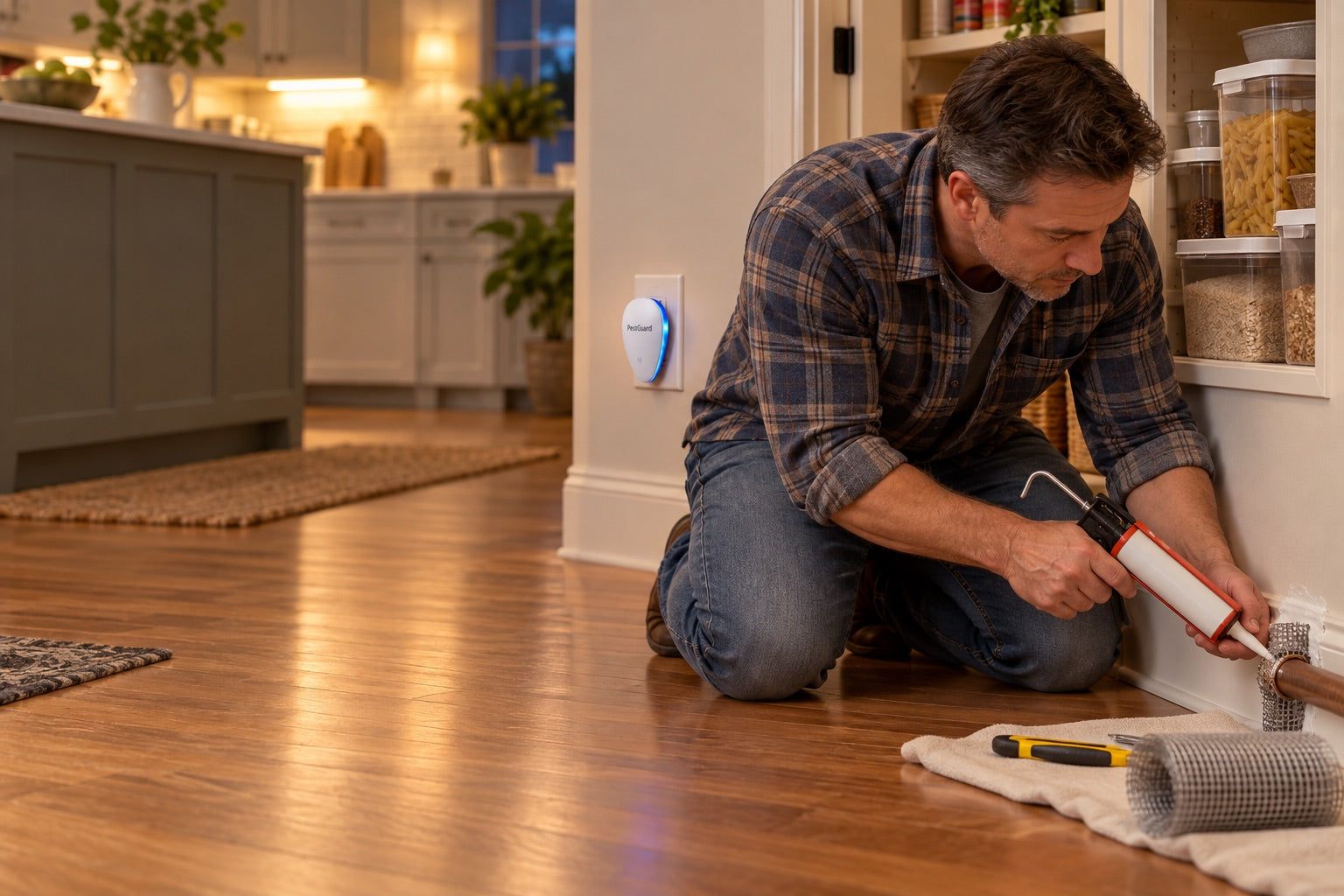
The most reliable rodent-repellent plan starts with exclusion, food control, active removal, and monitoring. A scent, spray, or ultrasonic plug-in should not be treated as a stand-alone fix for an active mouse or rat problem.
“What can I put down so they stay away?” is a completely reasonable question. It is also where the rodent-control aisle can send a homeowner in circles—from peppermint to pouches, lights, sounds, sprays, and increasingly dramatic promises.
The problem is that a hungry rodent with an open route into a warm pantry has several strong reasons to ignore a weak deterrent. The better question is: which part of the attraction-and-entry system can I remove?
Repellent is a category. Exclusion, sanitation, removal, and monitoring are the plan.
Build the Plan in Four Layers
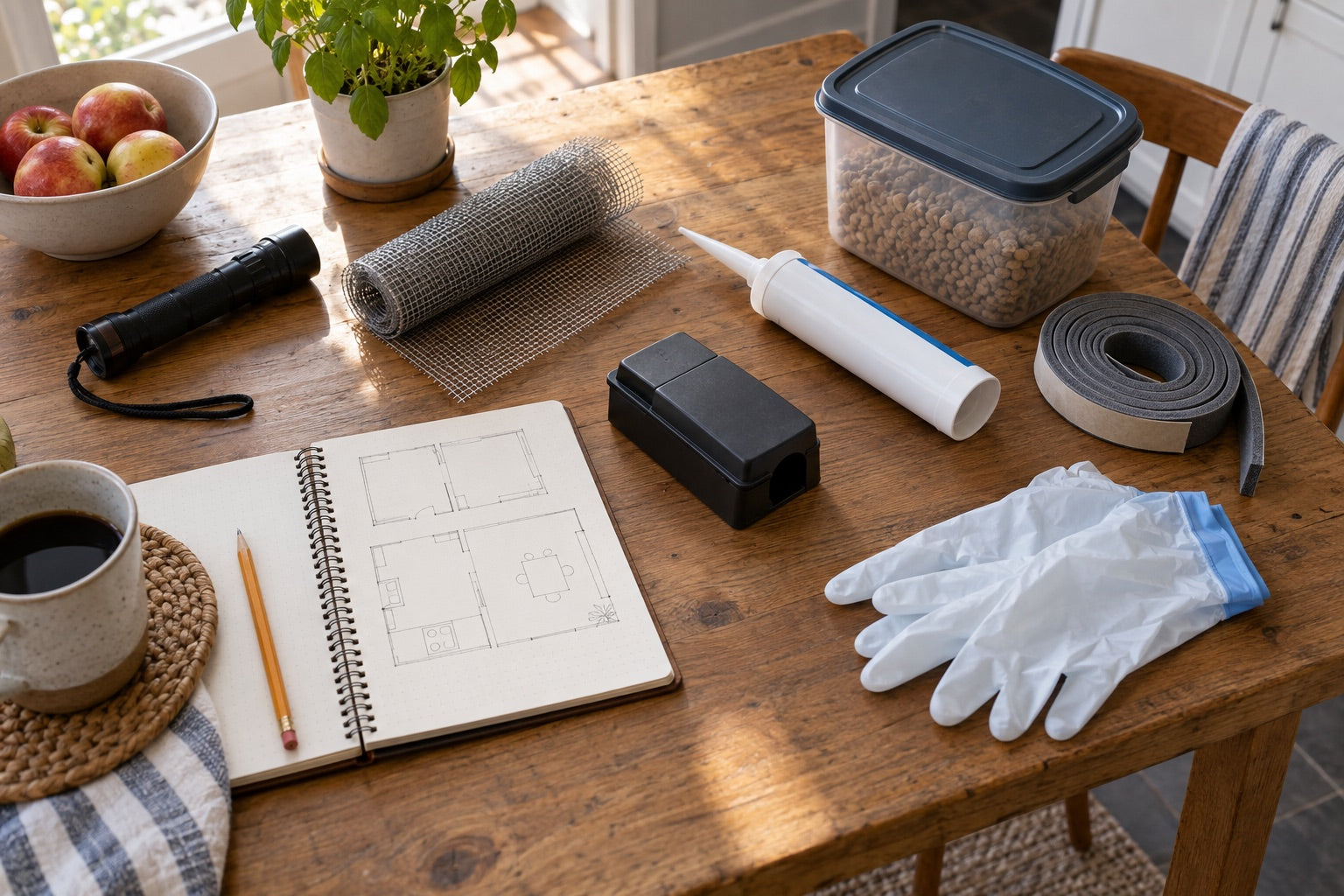
What Each “Repellent” Option Can—and Cannot—Do
| Option | Useful role | Important limit |
|---|---|---|
| Food and water control | Removes the reason to stay | Requires daily habits and secure storage. |
| Sealing entry points | Prevents re-entry and protects the whole plan | Needs a careful interior and exterior inspection. |
| Snap or enclosed traps | Removes active animals with confirmation | Must be placed and checked safely. |
| Scent products | May change a small local area temporarily | Odor fades and does not close the route. |
| Ultrasonic plug-ins | Optional no-spray room layer | Evidence and results vary; signals do not replace exclusion or active control. |
| Professional service | Traces hidden routes and handles difficult activity | Costs more, but may be safest for complex infestations. |
The Pencil-Width Rule Changes the Inspection
The CDC notes that a mouse can fit through a hole about one-quarter inch wide. Look closely at utility penetrations, worn thresholds, cabinet backs, crawl-space transitions, vents, and garage doors. Rats generally need larger routes, but the same principle applies: if the structure keeps offering access, the next animal can undo a temporary improvement.
Use materials suited to the opening and surface. CDC guidance includes steel wool secured with caulk for small holes and more durable metal or cement-type materials for larger repairs.
Fresh droppings, repeated sightings, gnawing, or scratching means the plan needs active control and safe cleanup. Do not wait for a scent or plug-in to provide capture confirmation it cannot provide.
How to Evaluate an Ultrasonic Layer Without Fooling Yourself
Start with one defined room and document the starting evidence. Keep the device in an open outlet, record every other change—cleaning, sealing, traps, bait, weather, and food storage—and decide in advance what improvement means. Walls, closed doors, cabinets, and furniture make “one plug covers the whole house” a poor test design.
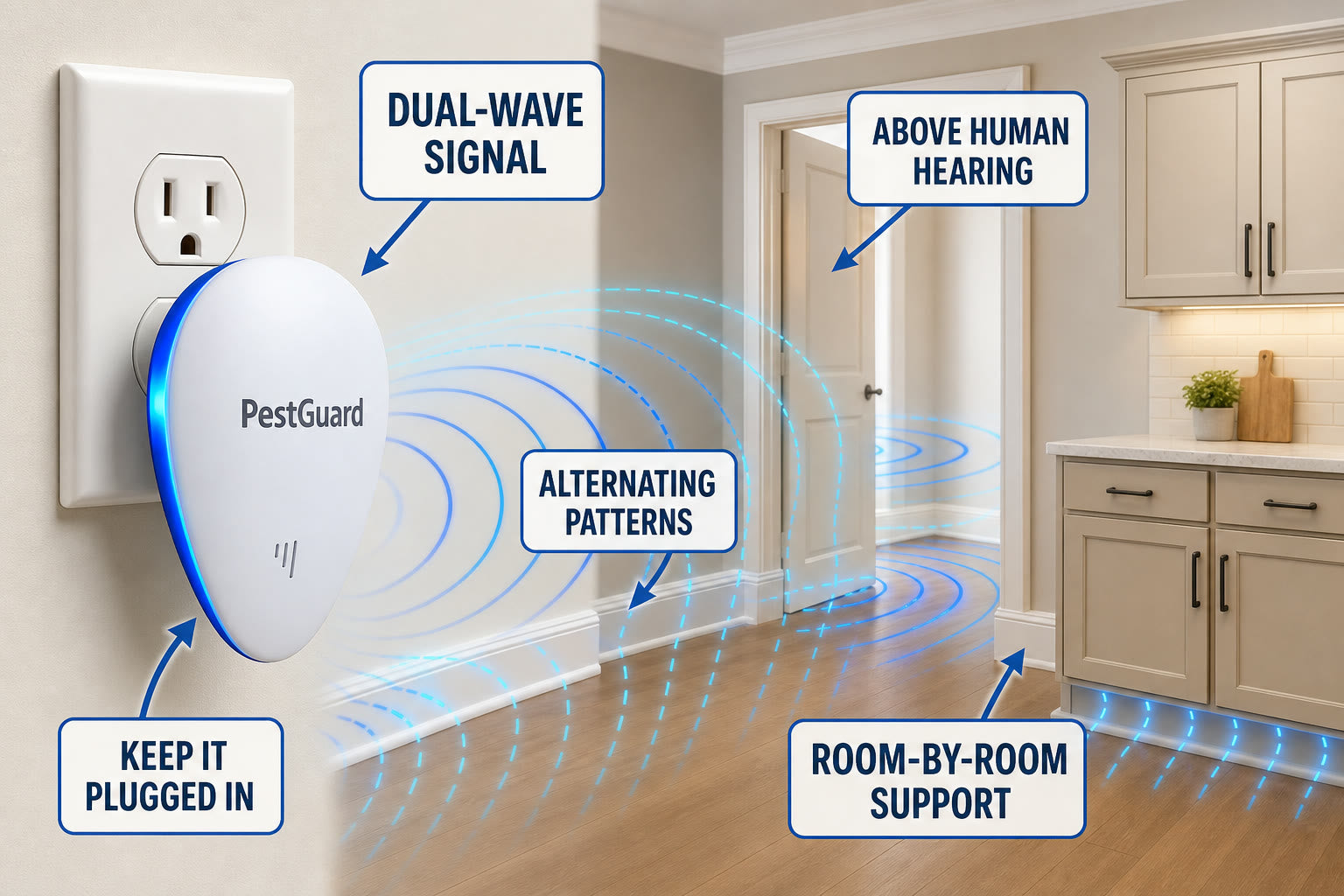
Be cautious with universal claims. The FTC has said ultrasonic pest-control efficacy claims require competent and reliable evidence. That is why this guide treats PestGuard as an optional room layer, not a proven replacement for traps, exclusion, pesticides used according to label, or professional service.
When to Stop Experimenting
Call a qualified professional when activity is spread across rooms, nesting is suspected inside a wall or ceiling, contamination is heavy, the building has complicated shared walls, or new signs continue after reasonable sealing and active control. The goal is a resolved route and a verified result—not an endless rotation of repellents.
Questions People Ask Before They Act
What is the best rodent repellent?
There is no single best repellent. The strongest plan combines food and water control, entry-point sealing, appropriate active removal, and monitoring. An ultrasonic device is only an optional room-level layer.
Do mouse repellents replace traps?
No. If mice are already active, use an appropriate active-control method and follow all safety and label directions.
Can mice enter through very small holes?
Yes. CDC guidance says mice can fit through an opening about one-quarter inch wide, roughly the width of a pencil.
When should I call a professional?
Get professional help for repeated or widespread activity, inaccessible nesting, heavy contamination, difficult structures, or results that do not improve after sealing and active control.
Sources Reviewed September 17, 2026
- CDC: Seal up to prevent rodents
- EPA: Options for dealing with rodent infestations
- EPA: About rats and mice
- FTC: Evidence required for ultrasonic pest-control claims
This guide is educational and is not a substitute for a pest-control professional, product-label directions, or public-health advice for a specific property.
Continue the PestGuard Home Report
Where PestGuard Fits—and Where It Does Not
PestGuard is a plug-in, no-spray room layer. It is not a trap, contact pesticide, or substitute for sealing entry points and removing an active infestation.
- Use it in an open outlet in the specific room you want to monitor.
- Keep sanitation, exclusion, trapping, and label-directed treatment in the plan.
- Judge the result by new signs over time, not by the blue power light.

Try the Room Plan for Up to 90 Days
Choose the pack by the number of rooms you plan to cover. Current pricing and the complete money-back policy are shown on the official product page.